https://twitter.com/ifthedevilisix2/sta
- The pandemic lockdowns were brought in for the vaccine
- The vaccine was brought in for the vaccine passport
- The vaccine passport was brought in for the biometric ID
- The biometric ID was brought in for the central bank digital currency
- The CBDC was brought in to enslave you
https://twitter.com/lasinterferenc1/sta
https://youtu.be/xflORds00Vo?list=PLbZp
Suddenly there emerged a cadre of pandemic experts who recommended—then quickly required—extreme and unprecedented things. People shouldn’t see their parents, visit friends, hold funerals or hug. We could never shake hands again. Wearing masks was useless! We MUST mask, both indoors and out. There were hotlines set up in many cities—including mine—for citizens to report their neighbors who did not comply. Police were sent to break up a Jewish funeral in New York City.
Day after day, media rained down information about who was to blame. Millennials, spring breakers, Southerners, motorcyclists. Scientists who proposed different theories were muffled, derided, sidelined. They were deemed dangerous, their ideas “misinformation.” To question was sacrilege.
I had lived through all of this before. (..)
The year of COVID continued with a drumbeat of warnings nationwide. Sanitize your mail with bleach and a UV light. Don’t wear a mask; you must wear a mask. Buy a pulse oximeter. Stock up on Tylenol, vitamin D, Pepcid. Form a pod. Get an air filter. Whisper so you don’t spit. Stand six feet from others—no, 10. Wear gloves. Put on goggles because the virus can get in through your eyes. Don’t pet the dog. Keep your teenager in the garage. Isolate a sick toddler in your basement with a bell. Wear two masks! Stay out of restaurants, nail salons, gyms. Open the windows. Close the schools.
Finally, the vaccines came and they seemed, at first, to be a miracle. But still there were certain things you weren’t allowed to discuss, like side effects, transmissibility, and natural immunity. The shots were immaculate and all-powerful! Then suddenly … they were not. Vaccinations were undone by the unvaccinated; they couldn’t save the faithful because of the sinful. And the drug alone wasn’t enough. True believers wore a mask as well and those who did not were causing the cure to fail.
Whatever the experts said on television became reality, became “science.” Meanwhile people died and died and died and just as the ongoing tragedy of autism of a child was somehow the mother’s fault, over and over again, doctors and officials blamed their audience of 3 billion for the disease. The more the cures failed, the greater the fault of the public. The flaw was never in the remedy, but in those who failed to “behave” and thereby brought the plague upon themselves. (..)
Ten or 15 or 25 years from now there will a reckoning, deep research, a spate of biographies and memoirs from the people who spent 2020-21 under the sway of gurus. News media that trumpeted their wisdom and methods will issue brisk, researched, documentary-style reports. People will swarm out of the shadows to claim they didn’t really believe the experts embodied science and were secretly resisting all along; even those who preached their gospel and strong-armed the public’s obedience will insist they actually did not.
https://www.tabletmag.com/sections/a
"Lesbians are still extremely scared to speak because they think they won't be believed, because the trans ideology is so silencing everywhere," she said. "I knew I wasn't attracted to them but internalised the idea that it was because of my 'transmisogyny' … "[They] threatened to out me as a terf and risk my job if I refused to sleep with [them]," she wrote. "I was too young to argue and had been brainwashed by queer theory so [they were] a 'woman' even if every fibre of my being was screaming throughout so I agreed to go home with [them].
https://www.bbc.com/news/uk-england-578
We are a carbon-based species. Carbon forms the foundation of our bodies and the external world we experience. Almost everything we touch is carbon-based. (..) Not only is our stuff mostly based on carbon, but the energy required to manipulate materials – to make stuff – comes predominately from carbon-based feedstocks as well. While not all stuff is based itself on carbon – copper wire is made of copper, after all – we can’t make use of it without first extracting energy from carbon fuels. In other words, we can’t mine copper without carbon. Those excavators, dump trucks, and bulldozers aren’t going to run themselves.
(..) We are experiencing the early phases of runaway inflation. On what seems like a daily basis, we observe critical inputs into our economy going vertical in price. If you crimp the supply of critical inputs with no workable plan to replace them, inflation is the unavoidable outcome. Energy is stuff. Energy is life. What’s the price elasticity of demand for life, and who can afford to pay it?
Nobody could have seen this coming, they’ll say. We did.
https://doomberg.substack.com/p/where-s
To keep the chemistry lesson as simple as possible, you need natural gas to produce ammonia and energy from fossil fuels to mine for phosphate. You need ammonia and phosphate to make fertilizer. You need fertilizer to grow food at scale.
https://doomberg.substack.com/p/starvat
The fundamental problem is that governments can add debt and other indirect promises of resources that create goods and services, but they cannot actually create the low-cost energy, water and mineral resources needed to fulfill those promises. (..) Debt is a promise of future funds to purchase goods and services, but it doesn’t make the resources required to create these goods and services materialize out of “thin air.” To keep these promises, oil needs to be extracted, refined, and delivered to farmers. (..) Debt is a promise of future funds to purchase goods and services, but it doesn’t make the resources required to create these goods and services materialize out of “thin air.” To keep these promises, oil needs to be extracted, refined, and delivered to farmers. (..) The catch is that the non-marketable US government debt doesn’t actually correspond to any resources. Any food used in 2022 (or 2050) will need to be grown in that year, using resources available in that year. (..) In some sense, the “real economy” operates on a “cash basis,” rather than an “accrual basis.” This has not been recognized in our accounting or our models. Ignoring the way the system really works likely leads to a hidden crunch, starting about 2021. (..) There is really a two-sided energy price problem. Consumers can afford only low energy prices but, as the result of depletion and population growth in oil exporting countries, producers need high oil prices.
We now live in a world with depleted resources. The oil and other types of energy that are available are high in cost, but the prices tend to stay too low for producers when all costs are included. (..) If we want OPEC to supply the rest of the world with more oil, the price will need to rise much higher than today’s Brent oil price of about $73. It likely will need to rise to at least $100 per barrel and show that it can stay at this high level. Otherwise, the supposed reserves of OPEC will mostly stay in the ground. (..) Why would OPEC want to increase its production, if the US can’t increase its own production at the current price level? All of the producers need a higher price level; it is consumers who cannot afford the higher price level.
(..) If missing energy can be replaced with a promise of debt to pay for more goods and services in the future, made with future energy, then perhaps all will be well. The quantity of debt that is required, relative to the GDP impact, keeps rising, suggesting this substitution is not working very well. We now seem to be reaching the end of the line with respect to what can be done with added debt to make the economy seem like it is performing adequately well.
(..) Today, interest rates are approximately at the level they were during the Great Depression of the 1930s. This makes sense; interest rates to some extent reflect the return an investor can expect to make. Right now, without a lot of government support programs, “Main Street” businesses around the world are struggling. This indicates that the economy is doing very poorly. There are too many people who cannot afford even basic goods and services. Indirectly, this feeds back to commodity prices that are not high enough for producers of energy products.
Recently, governments of many countries have tried a different approach. Instead of loans, they are providing something closer to giveaways. Renters are allowed to stay rent-free in their apartments. Or, checks are given to all citizens earning below some specified amount. What we seem to be finding is that these giveaways produce inflation in the price of goods that poor people buy most frequently, such as food and used cars.
The giveaways don’t actually produce more of the required goods and services, however. Instead, would-be workers decide that they really don’t want to take a low-paid job if the giveaways provide nearly as much income. The loss of workers then acts to reduce production. With lower production of goods and services, a smaller quantity of oil is required, so the oil price tends to fall. The price certainly does not rise to the level needed by oil producers.
In a finite world, longer-term models need to take into account the fact that resources deplete and the population keeps rising. Any modeler who tries to take into account the fact that resources deplete and the overall population keeps rising will quickly come to the conclusion that, at some point, every economy will have to collapse. This has been known for a very long time. Back in 1957, Admiral Hyman Rickover of the US Navy said,
"Surplus energy provides the material foundation for civilized living – a comfortable and tasteful home instead of a bare shelter; attractive clothing instead of mere covering to keep warm; appetizing food instead of anything that suffices to appease hunger. . . For it is an unpleasant fact that according to our best estimates, total fossil fuel reserves recoverable at not over twice today’s unit cost, are likely to run out at some time between the years 2000 and 2050, if present standards of living and population growth rates are taken into account."
Now, in 2021, it looks as if this problem is starting to hit us. But no one (since Jimmy Carter, who was not re-elected) has dared tell the general public. Instead, accrual accounting with more and more debt is used in financial statements, including GDP statements. Actuaries put together Social Security funding estimates as if the resources to provide the promised benefits will really be there. Climate change models are prepared as if business as usual can go on for the next hundred years. Everything published by the mainstream media is based on the underlying assumption that we will have no problems other than climate change for the next 100 years.
(..) We don’t seem to have a good way out of our current predicament. This seems to be what is behind all of the recent internet censorship. Renewables and nuclear require fossil fuel energy for their production and maintenance. The powers that be don’t want anyone to know that nearly all of the “happily ever after using renewables” stories we hear are based on wishful thinking.
https://ourfiniteworld.com/2021/08/30/t
Leftists’ news organs will actually “fact check jokes [and] try to rate them false, so they can get them taken down for misinformation,” he explained.
https://thenewamerican.com/trans-tyrann
“As Adrian Vermeule puts it, liberalism fears that its dependence on and fundamental difference from democracy will be exposed if a sustained course of non-liberal popular opinion comes to light. The solution is to offer an idealised concept of democracy, sharply distinguished from “mere majoritarianism.” By this device, the liberal may get to preserve his self-understanding as a democrat. This can become quite strained, as in the reflex to call the popularly elected governments of Poland and Hungary “antidemocratic”. When Pew did opinion polling in Afghanistan a decade ago and found that something like 95% of respondents expressed a preference that sharia law should be the law of the land, this was not allowed to interrupt the conviction that making Afghanistan “democratic” would require a feminist social transformation. That is, an explicitly anti-majoritarian revolution.
(..) and it was Rawls who insisted on this crucial point: if you could just establish the right framing conditions for deliberation, the demos would arrive at acceptably liberal positions. We should be able to formalise these conditions, it was thought. And conversely, wherever the opinions of the demos depart from an axis running roughly from the editorial page of the New York Times to that of the Wall Street Journal, it was taken to be prima facie evidence that there was some distorting influence in the discursive conditions under which people were conducting their thought processes, or their conversations among themselves. The result was opinion that was not authentically democratic (i.e., not liberal).
(..) I remember there was one grad student in my department who was running experiments on focus groups, seeing if he could get them to think the right thoughts.
To my unsympathetic eye, this looked like an exercise in self-delusion by aspiring apparatchiks for whom a frankly elitist posture would have been psychologically untenable. I don’t know if that grad student got his subjects to think the right thoughts. But I have little doubt he got them to say the right thoughts, and thereby lend those thoughts the demotic imprimatur he was looking for. Maybe that was good enough. Political correctness might be understood as a device that became necessary for liberalism to continue to claim the mantle of democracy, even as prosecution of its program would require increasingly antidemocratic measures.
(..) One of the central tenets of progressives’ self-understanding is that they are pro-fact and pro-science, while their opponents (often the majority) are said to have an unaccountable aversion to these good things: they cling to fond illusions and irrational anxieties. It follows that good governance means giving people informed choices. This is not the same as giving people what they think they want, according to their untutored preferences. Informed choices are the ones that make sense within a well-curated informational context.
(..) As Eric Schmidt told the Wall Street Journal, “[O]ne idea is that more and more searches are done on your behalf without you having to type. . . . I actually think most people don’t want Google to answer their questions. They want Google to tell them what they should be doing next.”
(..) More recently, the relative risks of the virus versus the vaccine for different demographics has been dismissed as irrelevant, for the sake of combatting vaccine hesitancy. But such deceptions, however well-intended, can succeed only if you have control over the flow of information. So once you go down this road of departing from the truth, you’re committed to censorship and rigorous narrative enforcement, which is very difficult to do in the Internet era.
(..) Covid is likely to do for public health what 9/11 did for the security state. Going through an airport, we still take off our shoes – because twenty years ago, some clown tried to light his shoe on fire. (..) One tries to put out of mind facts such as this: in independent audits of airport security, about 80-90% of weapons pass through undetected. The microwave machine presents an imposing image of science that helps us bury such knowledge. We have a duty to carry out an ascetic introspection, searching out any remaining tendencies toward rational pride and regard for the truth, submitting them to analysis. Similarly, the irrationality of the Covid rules we comply with has perhaps become their main point. In complying, we enact the new terms of citizenship.”
https://unherd.com/2021/10/the-new-covi
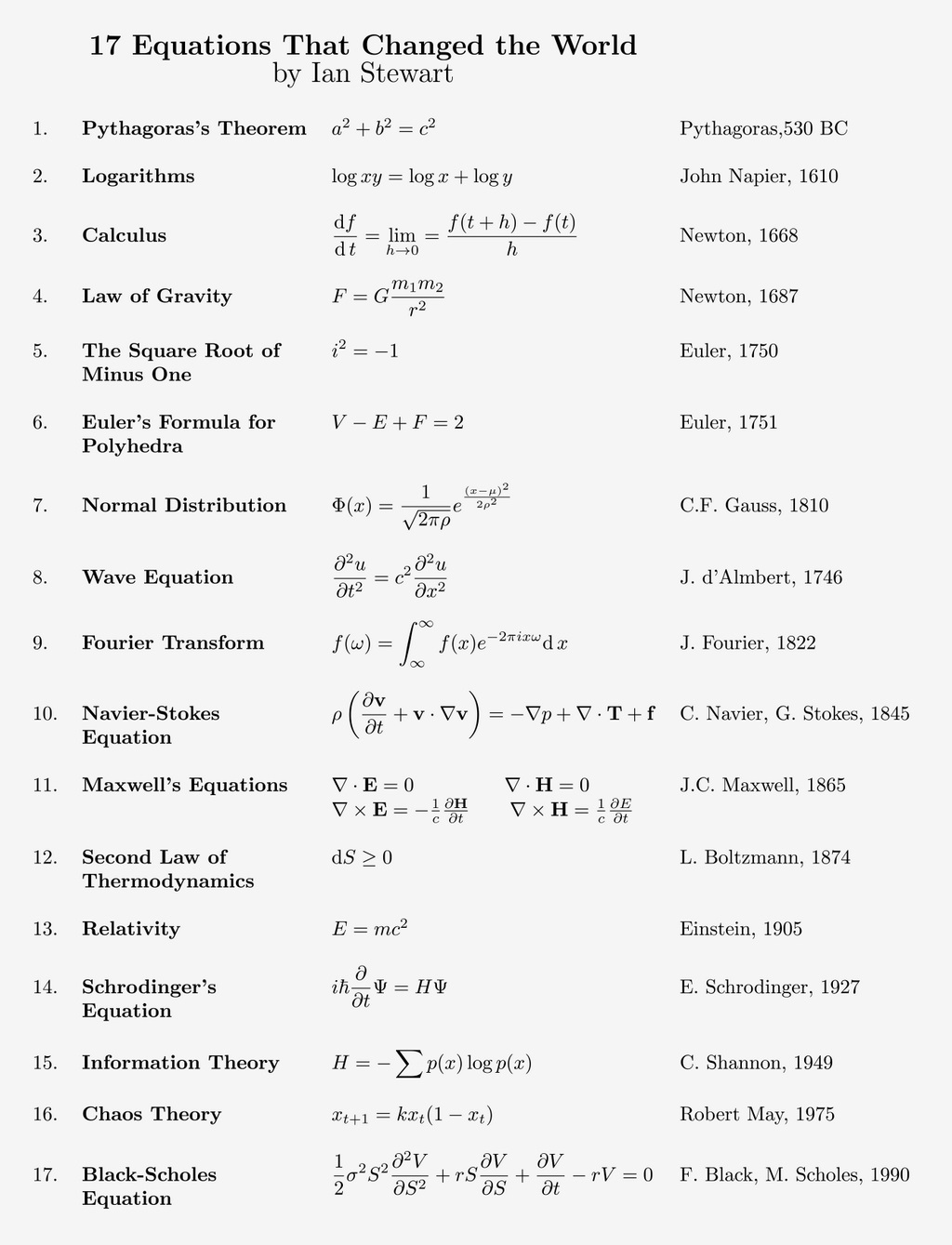
Apskatot šo sarakstu, ikviens normāls cilvēks saprot, ka matemātikā/fizikā ir nopietna problēma ar dažādību (diversity):
https://www.commentary.org/articles/jam
In the 1930s, Hitler was widely viewed as just another protectionist central planner who recognized the supposed failure of the free market and the need for nationally guided economic development. Proto-Keynesian socialist economist Joan Robinson wrote that "Hitler found a cure against unemployment before Keynes was finished explaining it." What were those economic policies? He suspended the gold standard, embarked on huge public-works programs like autobahns, protected industry from foreign competition, expanded credit, instituted jobs programs, bullied the private sector on prices and production decisions, vastly expanded the military, enforced capital controls, instituted family planning, penalized smoking, brought about national healthcare and unemployment insurance, imposed education standards, and eventually ran huge deficits. The Nazi interventionist program was essential to the regime's rejection of the market economy and its embrace of socialism in one country. Such programs remain widely praised today, even given their failures. They are features of every "capitalist" democracy. Keynes himself admired the Nazi economic program, writing in the foreword to the German edition to the General Theory: "[T]he theory of output as a whole, which is what the following book purports to provide, is much more easily adapted to the conditions of a totalitarian state, than is the theory of production and distribution of a given output produced under the conditions of free competition and a large measure of laissez-faire." Keynes's comment, which may shock many, did not come out of the blue. Hitler's economists rejected laissez-faire, and admired Keynes, even foreshadowing him in many ways. Similarly, the Keynesians admired Hitler (see George Garvy, "Keynes and the Economic Activists of Pre-Hitler Germany," The Journal of Political Economy, Volume 83, Issue 2, April 1975, pp. 391–405).
https://mises.org/library/hitlers-econo

![[info]](http://klab.lv/img/userinfo.gif) brookings, you’ve been right all along, don’t let anyone tell you otherwise!
brookings, you’ve been right all along, don’t let anyone tell you otherwise!
At schools less wealthy than Princeton, the struggle isn't for status so much as for survival. In just the last six months, Howard University and the University of Vermont both eliminated their classics departments, citing the untenable costs of maintaining them. Other departments have survived only by making Greek and Latin optional. "We'd have fewer majors otherwise," said Eric Adler, a classicist at the University of Maryland. "We can't afford the requirements."
The scramble for students is in part a product of academia's consumerist culture, which treats education as an instrumental, customizable good. "Many institutions promise students that they can pursue their own interests and goals," said George Washington University's Samuel Goldman. "But it turns out that most students prefer pre-professional majors to the humanities and don't like prerequisites or distribution requirements, especially for language study. If we simply give the customers what they want, the liberal arts will struggle to survive."
Concessions to the customer often serve the interests of the ideological entrepreneur. Progressives are "very happy with the neoliberal curriculum," Adler told the Free Beacon, because it rejects the idea that some texts are more important than others. Meanwhile, the "strategic initiatives" that culminate in cuts to classics have also tended to culminate in the creation of diversity offices. In 2017, for example, the University of Tulsa launched a five-year plan to "empower" students to "bring value to others." Greek and Latin were deemed insufficiently valuable and axed as a result—but the university was happy to foot the bill for a "diversity outreach admissions counselor" who would advance "student recruitment."
Academic corporatization did not begin with corporate progressivism, however. Its roots date back to the mid-19th century, when universities transitioned from a prescribed curriculum to an elective-based one. That transition was spearheaded by Charles Eliot, Harvard University's 21st president, who abolished long-standing liberal arts requirements and gave students unprecedented freedom to choose their classes. In so doing, he conceived of education as a kind of free market: Disciplines that attracted sufficient student attention would prosper and live; those that didn't would die.
The result, says Adler, was "a race to the bottom in which every discipline had to act as its own salesperson." Classics could no longer take students for granted, but had to justify itself amid curricular competition.
The justification classicists settled on is still with us today: Learning Greek and Latin might not have any direct utility, they argued then, but it would promote habits of "mental discipline"—the 19th century term for "critical thinking."
This was a novel argument. From the Mayflower Compact to the Civil War, American universities had viewed classics as a means of moral formation. They did not teach Homer and Virgil to make students smarter, but to make them better. It was only after academia became a market, governed by the amoral churn of supply and demand, that classics received a market-based rationale.
The corporatization of classics may be sold as a victory for diversity. In truth, it is anything but. Contemporary humanities are obsessed with the study of different cultures, one classicist observed. "How are you going to understand ‘the other' if you don't learn their language?"
https://freebeacon.com/campus/how-corpo
"Nature and The Lancet played important roles in enabling, encouraging, and enforcing the false narrative that science evidence indicates Sars-CoV-2 had a natural-spillover origin points and the false narrative that this was the scientific consensus.”
"The science establishment colluded to dismiss the lab leak hypothesis as a conspiracy theory, assisted by prominent experts with clear conflicts of interest, patsy politicians and a pathetic media that mostly failed to do its job."
"[A]t the heart of this scandal lie some of the world’s most influential science journals. These..have played a central role in shutting down discussion and discrediting alternative views on the origins, with disastrous consequences for our understanding of events."
https://unherd.com/2021/06/beijings-use
The real reason the elite hated Donald Trump was not that he was an ideological conservative (he only sort of was) or that he tweeted mean things (they like mean tweets, just not ones directed at them). It was that Trump identified the failures of “the best and the brightest” and called them out. There is nothing these experts hate more than challenges to the authority they think they deserve.
https://townhall.com/columnists/kurtsch
https://www.nommeraadio.ee/meedia/pdf/R
hedera, Tu esi jauka, bet vientiesīga. Šis shout-out speciāli Tev:
“ Former @CDCgov director @redfield_dr got death threats from fellow scientists after telling CNN he believed #COVID19 had lab origin. “I was threatened and ostracized because I proposed another hypothesis,” Redfield told @VanityFair.”
https://mobile.twitter.com/KatherineEba
"You dropped 150 grand on an education you could've gotten for a dollar fifty in late charges at the public library"
https://www.youtube.com/watch?v=v9mC6Os
https://www.nytimes.com/2021/05/31/opin
Pie extranjero vērtīga norāde uz rakstu par institucionālo groupthink:
"The most important lesson though is not just that this was likely a muddle being retconned as strategy (and we should be wary of such post-hoc reasoning in the future) but it also illustrates a key weakness of groupthink among expert views- once something becomes the “institutional opinion” it automatically gets endorsement from every other major institution similar to the way an AAA rating was rebroadcast through the financial system in 2008. You think you’re getting a diversity of viewpoints which are coalescing around the truth, but in reality many institutions are just repeater stations who accept the incoming opinion unquestioningly and then derive all their other positions from there."
https://lessonsfromthecrisis.substack.c
"Classics majors at Princeton will no longer be required to learn Greek or Latin" :D :D :D :D
https://twitter.com/aaronsibarium/statu
https://mobile.twitter.com/KarakeMark/s
https://newdiscourses.com/2021/05/h
https://www.youtube.com/watch?v=HMskjKZ
We’re living in a country that’s the finest place on earth
But some folks don’t appreciate this land that gave them birth
I hear that up in Washington they’re having an awful fuss
‘Cause Communists and spies were making monkeys out of us
The bureaus and departments have been busy night and day
They’re figuring out just how we gave our secrets all away
And Congress has appointed a committee, so they said
To find out who’s American and who’s a low-down Red.
They call them up to Washington to speak for Uncle Sam
But when they ask them what they are, they shut up like a clam
I wish they’d take and put me on the witness stand today
I’d yell so loud old Stalin could hear me all the way
I’m no Communist, and I’ll tell you that right now
I believe a man should own his own house and car and cow
I like this private ownership, and I want to be left alone
Let the government run its business and let me run my own
Our government is bigger than it ever was today
The more they hire to work for it, the more they have to pay
Our public servants should be proud and honest you would think
Instead of taking bribes and dressing up their wives in mink
The taxes keep on going up, of that there is no doubt
But still, they just can’t take it in as fast as they dish it out
Our national debt is a monster size and growin’ every day
Our children’s children, still unborn are gonna have to pay
Our dollar used to be the soundest money on this earth
But now two bucks won’t even buy a good old dollar’s worth
Unless we stop inflation and take care of what we’ve got
The Communists may win the fight and never fire a shot
I’m no Communist, and I’ll tell you that right now
I believe a man should own his own house and car and cow
I like this private ownership, and I want to be left alone
Let the government run its business and let me run my own
There is no "neutral" public square, that notion is a libertarian fantasy.
Right now, secular humanism dominates our society, with terrible consequences.
https://twitter.com/SohrabAhmari/st
Navigate: (Previous 50 entries)