
The last king of England (so far), George VI was an unlikely monarch,
thrust on to the most high-profile throne in the world when his elder
brother, Edward VIII, abdicated in December 1936. The tale of George's
ascension to the kingship -- and overcoming a lifelong stammer while
quietly inspiring his country during the bleak early days of World War
II.
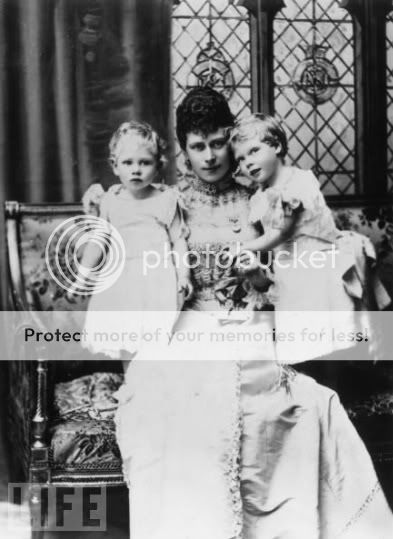
George VI (here in 1897) was born in 1895, the second son of George V.
Until he assumed power as an adult, he was known as Albert. He was born
on the anniversary of the death of Prince Albert (1819 - 1861), the
husband of Queen Victoria (1819 - 1901).
Albert's older brother was Edward, who was expected to become the king
of England. Albert was known as a delicate, sickly child who often broke
down in tears. Here: Princess Mary with her sons Edward (right) and
Albert (left) in 1898.
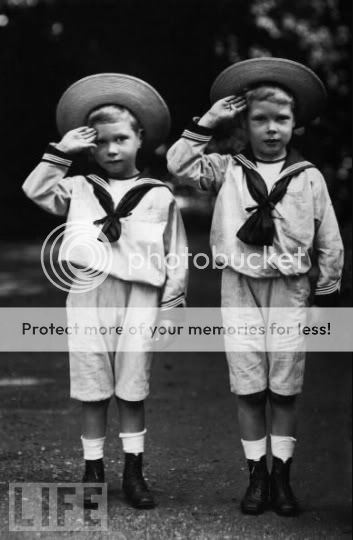
Albert (left) and Edward salute in 1900. As children of royalty at the
turn of the century, the boys were raised by nannies and had little
contact with their parents.
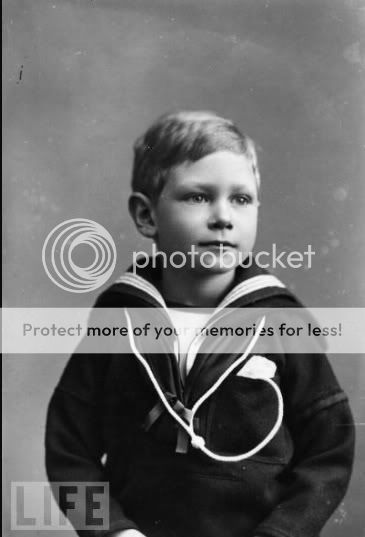
Albert poses in 1901. His family nickname was "Bertie." He suffered a
stammer and was forced to wear corrective splints for his knees. He was
also naturally lefthanded, but was forced to write and perform other
tasks with his right.
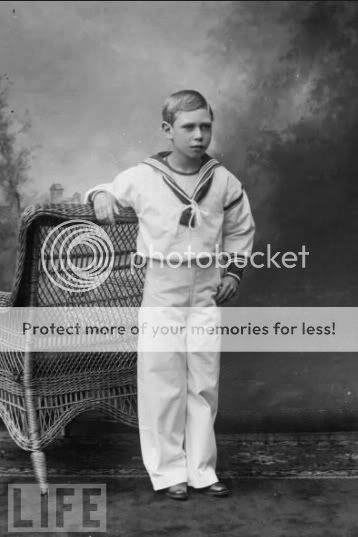
In 1901, Albert (here in 1904) became third in line to the throne when Queen Victoria died and his grandfather became king.
Albert poses in 1911. The prince was sent to a royal naval college as a
cadet in 1909. He was at the bottom of his class but was allowed to
graduate to the next stage of a naval career anyway.

In 1918, the United Kingdom created the Royal Air Force, and Albert
transferred over as a cadet and as commander of a boy's squadron. He
later became a staff officer with the RAF.
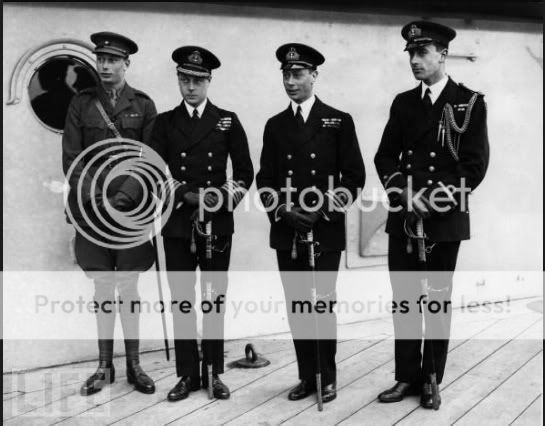
After his military service in 1919, Prince Albert went to Cambridge
University to study history and economics. A year later, he was made
Duke of York and began assuming his royal duties. Here: Prince Edward
(second from left), Prince Henry (on left), and Prince Albert (second
from right) pose before Edward goes on a trip to Australia in 1920. On
the right is Lord Mountbatten, who later became the last viceroy of
India.
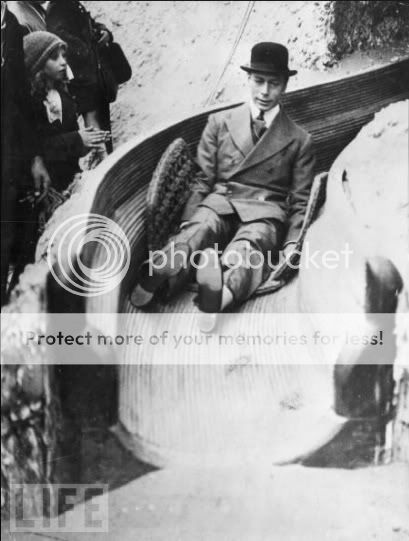
As a younger brother to the presumptive future king, Albert enjoyed a
relatively low-key life, arranging summer camps for boys and touring
working-class sites. Here: The Duke of York enjoys a slide at the
Wembley Exhibition in 1925. His disastrous speech at the exhibition
convinced him to seek out the help of speech therapist Lionel Logue to
remove his stammer.
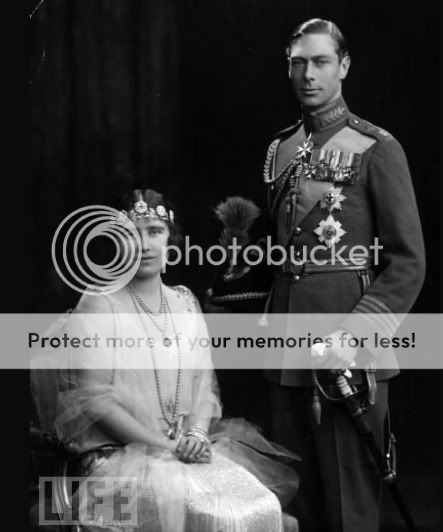
In 1923, Albert married Lady Elizabeth Bowes-Lyon, who despite royal
ancestry, was technically a commoner. Here: The couple on their wedding
day.
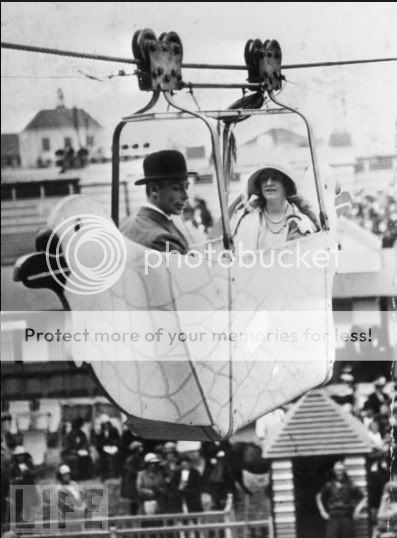
Elizabeth rejected Albert's proposals twice before accepting because she
didn't want to deal with the issues that came (and still come) with
being a member of the royal family. She "afraid never, never again to be
free to think, speak and act as I feel I really ought to." Here: The couple take a ride at the Wembley Exhibition in 1925.
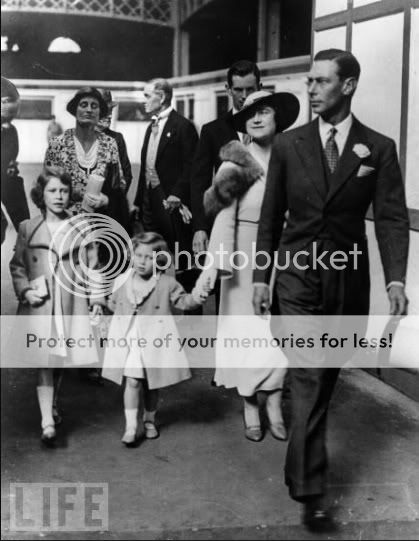
The couple had two daughters: Elizabeth (called Lilibet) and Margaret Rose. Here: The family in 1932.
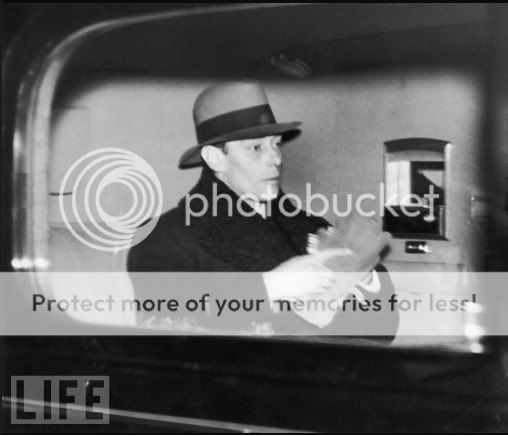
On Jan. 20, 1936, King George V died and was succeeded by Prince Edward,
who became Edward VIII. But Edward VIII stepped down less than a year
later, in December 1936, when he made it clear he was going to marry
Wallis Simpson, an American divorcee.
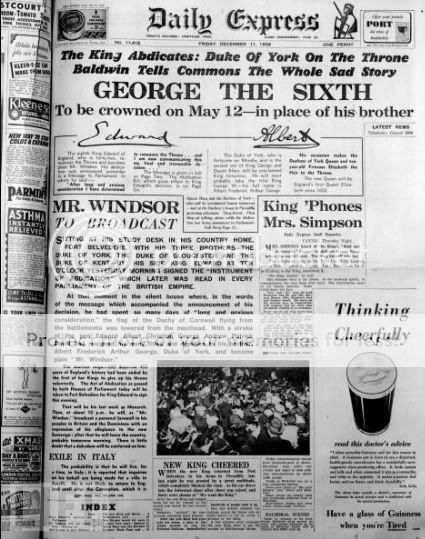
Edward had no children, and Albert was suddenly the heir presumptive.
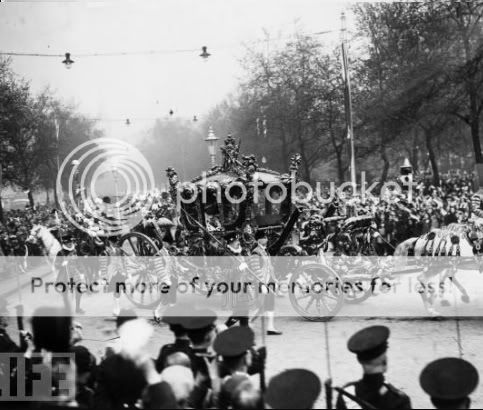
On May 12, 1937, Albert became the new king of England. He chose to shed
the name he'd been known by -- Albert -- and took the name of his
father, becoming George VI. Here: The newly crowned king and his queen ride to Buckingham Palace.
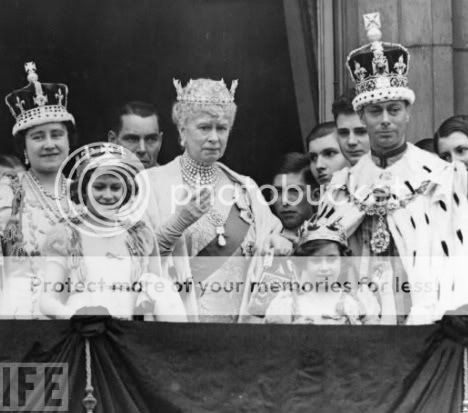
When he learned that he was fated to be king, Albert reportedly went to
see his mother and wept "like a child" at the prospect of his royal, and
very public, future. He was not yet 41. Here: King George VI (right)
views his subjects after the coronation, with Queen Elizabeth and his
mother, Queen Mary. Princesses Elizabeth (left) and Margaret Rose round
out the royal cluster.
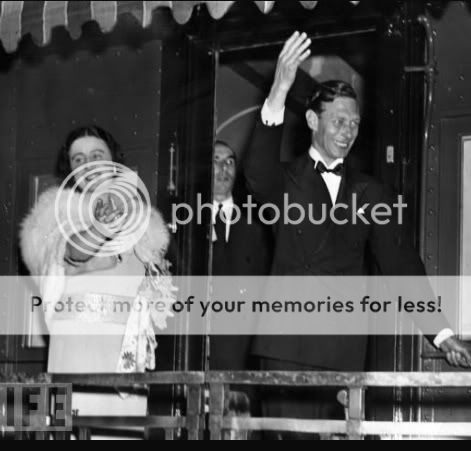
After his coronation, the king made official tours of France and the
U.S. and Canada. They weren't merely vacations -- the trips were
intended to strengthen the British position in the event of an
increasingly unavoidable war with Nazi Germany. Here: King George VI and Queen Elizabeth wave from the observation platform of their train as they leave America in 1939.
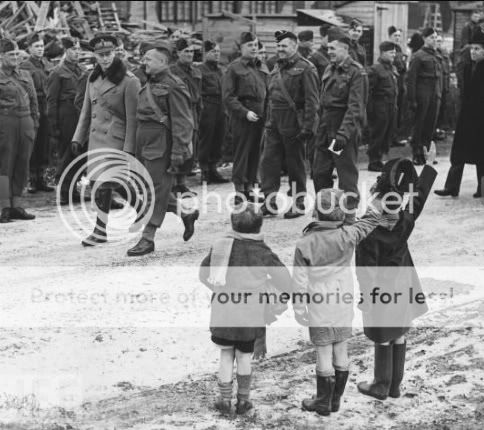
During World War II, Buckingham Palace had its windows and rooms boarded
up and its heat turned off. The royal family underwent rationing just
like other Britons -- even when Eleanor Roosevelt came to visit. Here: Youngsters cheer the king as he inspects Canadian troops stationed in Britain in 1940.
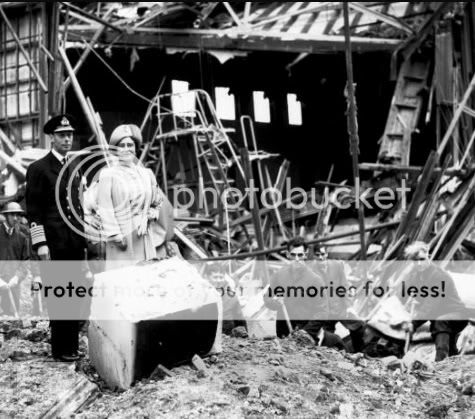
In September 1940, Germany began the first of its bombing attacks on
London, killing 1,000 people in the city's East End. Nearly a week
later, King George VI and Queen Elizabeth were nearly killed themselves
when a German bomb fell on the courtyard of Buckingham Palace. "I am
glad we have been bombed," the queen said. "It makes me feel we can look
the East End in the face." Here: The King and Queen survey the damage to Buckingham Palace.

As king in the midst of the most arduous war Britons had endured in
centuries, George VI became a symbol of national fortitude,
self-reliance, and understated strength. Here: King George VI takes a moment on his farm at Windsor to greet a pig in 1942.
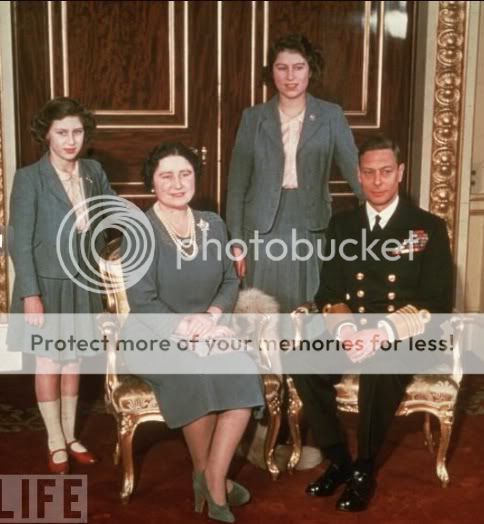
During the war, the royal family insisted on staying in England despite
the German bombing and threat of invasion. The queen learned to fire a
revolver, and when a senior politician suggested the princesses be taken
to safety in Canada, she responded, "The children won't go without me. I
won't leave without the king. And the king will never leave."

The stress of the war and his smoking habit took their toll on the
king's health, and he developed lung cancer and related problems.
Princess Elizabeth began filling in for her father for public functions,
going so far as to take his place on a long-planned tour of Australia
and New Zealand after the war.
The king was head of state as the war-ravaged British Empire was
gradually dismantled around the world, replaced by a commonwealth.
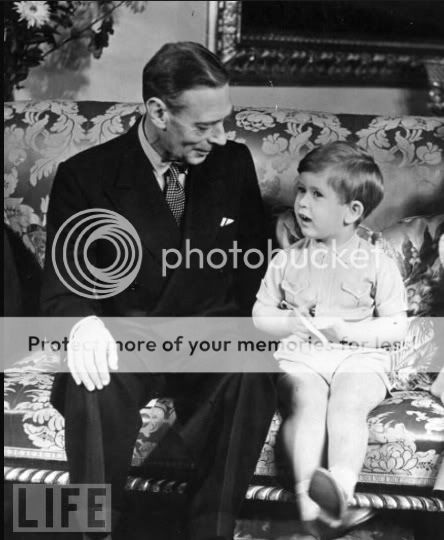
Meanwhile, King George VI's first grandchild, Charles, was born in 1948.
The king (seen here in 1951 with the 3-year-old) had just issued a
decree that allowed Charles to be titled a prince, as opposed to a mere
earl.
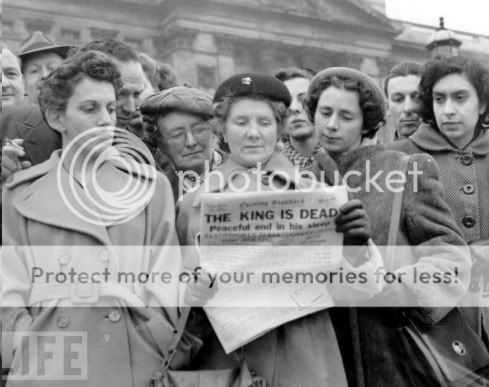
On Feb. 6, 1952, King George VI died of a coronary thrombosis while
sleeping at Sandringham House in Norfolk, England. His daughter
Elizabeth was now the head of state of Great Britain, and became Queen
Elizabeth II.
King George VI's body lay in state at Westminster Hall before being
buried at St. George's Chapel, Windsor. In 2002, he was joined by his
wife and daughter Margaret, who had died within weeks of each other.